
Residential Window Film in Huntington Beach: A Guide for Homeowners
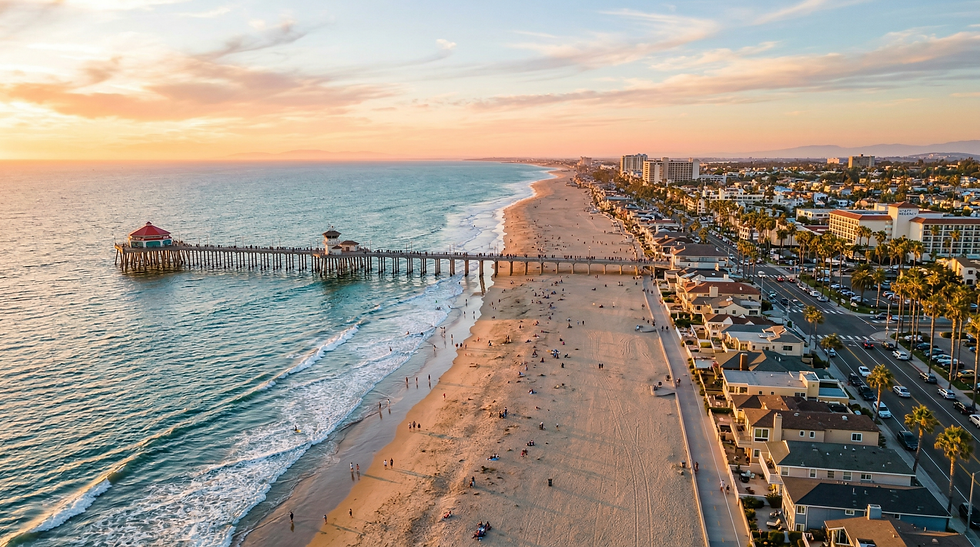
Huntington Beach is Surf City for a reason. The lifestyle here is built around the beach, the sun, and the outdoors — and the homes reflect that. Bungalows near the pier, newer construction inland off Beach Boulevard, condos along the strand, and family homes throughout the neighborhoods all share one thing: significant sun exposure that affects comfort, energy costs, and interior longevity year-round.
Residential window film is one of the most practical home upgrades available for Huntington Beach homeowners. It addresses the specific challenges of coastal and near-coastal living — glare, UV damage, heat, and privacy — without changing the laid-back character of your home or blocking the light that makes Surf City living worth it.
Residential Window Film Huntington Beach — What Homeowners Most Commonly Need
Solar control for coastal and inland heat: Huntington Beach spans a range of sun exposures — from the immediate coastal zone where ocean breezes moderate temperatures, to the inland neighborhoods off Beach Boulevard and Goldenwest where afternoon heat is more intense without coastal relief. West-facing living rooms, master bedrooms, and great rooms are the most common targets for solar control film. Spectrally selective and ceramic films reduce heat and glare while keeping interiors bright — so the home stays comfortable without feeling closed off from the light.
UV protection for coastal interiors: Coastal UV intensity in Huntington Beach is amplified by reflected light off the water, particularly for homes near the strand and pier area. Hardwood floors, upholstered furniture, rugs, and artwork are all at risk from cumulative UV exposure that builds gradually until fading becomes obvious. UV protection film blocking up to 99% of UV radiation protects those surfaces continuously — no blinds required.
Privacy for coastal density: The density of Huntington Beach's coastal neighborhoods — particularly around the strand, downtown, and the areas near the pier — means neighbors, walkways, and foot traffic are often in close proximity. Street-facing living rooms and bedrooms benefit from reflective or neutral privacy film that provides daytime privacy without sacrificing natural light. Bathrooms and entryway sidelights benefit from frosted film for full-time privacy.
Security for ground floor and sliding glass doors: Ground floor windows and sliding glass doors are the most vulnerable points in any home's exterior. Security film holds glass together on impact, making entry significantly more difficult and protecting against injury from broken glass. For families with young children — common in Huntington Beach's family-oriented neighborhoods — security film on patio doors and large glass panels is a practical safety upgrade beyond just break-in deterrence.
Decorative film for bathrooms and entryways: Frosted or patterned decorative film on bathroom windows, shower enclosures, and entryway sidelights is a quick, affordable upgrade that improves privacy and adds a more finished look to standard clear glass without any construction.
Turf burn protection: Huntington Beach's mix of older and newer construction means some homes have low-e windows capable of focusing reflected sunlight onto artificial turf. If you've noticed melting or discoloration on turf near your windows, turf burn protection film solves the problem at the source.
Huntington Beach Home Types and Window Film Priorities
Strand and pier-adjacent homes: The highest-density and most sun-exposed residential area in Huntington Beach. Homes here are close together with neighbors, walkways, and beach foot traffic in immediate proximity. Privacy is often the primary concern alongside UV protection and glare control on west-facing glass. Security film on ground floor and street-facing glass is also common given the public-facing nature of these properties.
Downtown and Main Street area: A mix of older bungalows, condos, and newer construction close to the commercial core. Similar priorities to strand properties — privacy, UV protection, and solar control on west-facing glass. Older single-pane construction in this area has the widest range of compatible film options.
Inland neighborhoods off Beach Boulevard and Goldenwest: Family-oriented neighborhoods that deal with more intense afternoon heat than the immediate coastal zone. Solar control is the primary driver here. Turf burn protection is more common in newer construction with low-e glass. Privacy film on street-facing windows is also a common request in denser subdivision areas.
Huntington Harbour: Waterfront and harbor-adjacent homes with west-facing glass that catches afternoon sun and reflected light off the water. Similar to Newport Beach harbor properties — glare and UV protection are equally important alongside heat control. Solar control film with high visible light transmission is the right approach for these exposures.
Seacliff and Bluffs: Established neighborhoods with a mix of single-pane and double-pane construction. Larger lots and more established tree coverage than coastal neighborhoods. Solar control and UV protection are the typical priorities. Less density means privacy film is less commonly needed than in coastal neighborhoods.
Frequently Asked Questions About Residential Window Film in Huntington Beach
Will window film affect my ocean views or natural light? Not with the right film. Spectrally selective and ceramic films maintain completely clear outward views while reducing glare and heat. Rooms stay bright — the harsh edge of direct sun and reflected light is what gets reduced, not the light itself.
Does residential window film require a permit in Huntington Beach? No. Residential window film installation does not require a permit in Huntington Beach. It is a non-structural modification to existing glass.
Can window film handle salt air and coastal conditions? Yes. Quality residential films are engineered for coastal environments. Properly installed premium film with correct edge sealing performs consistently in salt air conditions over its full lifespan — typically 10 to 15 years or more.
Is window film compatible with my existing glass? Huntington Beach homes range from older single-pane bungalows near the beach to newer double-pane and low-e construction inland. Film compatibility depends on your specific glass type. An on-site assessment confirms your glass type and identifies compatible options before any film is selected.
How much does residential window film cost in Huntington Beach? Pricing is based on square footage of glass. Final cost depends on film type, glass type, and project size. An on-site assessment gives you exact pricing for your specific home — no generic estimates.
How long does residential window film last? Quality residential films typically last 10 to 15 years or more with a manufacturer warranty covering clarity, adhesion, and performance.
What to Expect from Residential Window Film Installation in Huntington Beach
Low-key process, no disruption to your home:
On-site assessment — glass type confirmed, sun and coastal exposure evaluated, compatible film options reviewed
Film selection — performance specs compared for your glass type and priorities
Scheduling — installation scheduled around your availability
Installation — film applied to the interior surface in most cases
Curing — minor hazing or small water bubbles resolve within days to weeks
Final inspection — film inspected for quality before the job is complete
For a full breakdown of every residential film type and how to choose the right one, see the complete guide: 👉 Residential Window Film for Orange County Homes
Serving Huntington Beach Homeowners
Calview Films installs residential window film throughout Huntington Beach — from the strand and pier area to downtown, Huntington Harbour, Seacliff, the Bluffs, and the inland neighborhoods off Beach Boulevard and Goldenwest. Solar control, UV protection, privacy, security, decorative, and turf burn protection — the right film depends on your home, your glass, and what you're trying to accomplish.
