

Turf Burn Protection Film for Orange County Homes
Stop Window Reflection From Damaging Your Artificial Turf
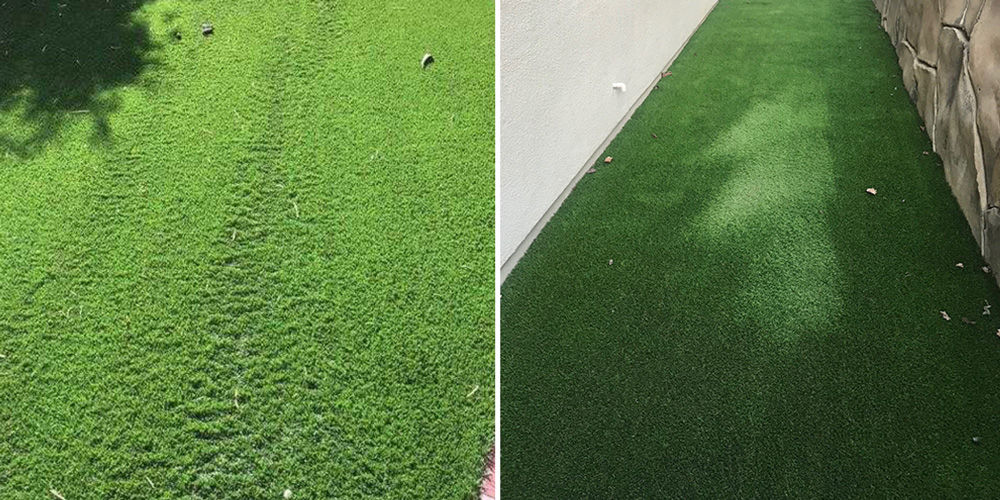
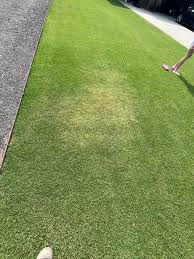
If you've noticed scorched, melted, or discolored patches on your artificial turf near a window, you're dealing with a problem that's become increasingly common across Orange County. Turf burn protection film solves it at the source, without replacing your windows or your turf.
What Is Turf Burn, and Why Is It Happening to Your Lawn?
Turf burn is the melting or scorching of synthetic grass caused by sunlight reflecting off nearby windows. It's not a flaw in your turf. It's a side effect of energy-efficient glass.
Modern low-e and dual-pane windows are designed to reflect heat back outside, which helps keep your home cool and lowers energy costs. The tradeoff is that the same reflective coating can concentrate sunlight into a focused beam, similar to how a magnifying glass works. When that beam lands on artificial turf, it can reach temperatures well above what natural grass or standard landscaping material can handle, resulting in visible melting, warping, or discoloration.
This is especially common in Orange County, where energy-efficient windows are standard in newer construction and artificial turf has become a popular drought-tolerant landscaping choice. The combination of the two creates the exact conditions turf burn needs to occur.
How Turf Burn Protection Works
Turf burn protection film is applied directly to the problem window and works by diffusing the glass's reflectivity. Instead of concentrating sunlight into a single damaging beam, the film scatters the reflected light in multiple directions, reducing the intensity enough that it no longer poses a risk to your turf. The film is applied only to the specific windows causing the issue, not your entire home, and the result is typically immediate.
How It Works
Diffuses Reflected Light. Scatters concentrated sunlight in multiple directions instead of letting it focus into a single damaging beam.
Targets Only the Problem Window. Applied specifically to the glass causing the issue, not your entire home.
Delivers Immediate Results. Once installed, the reflected hot spot disappears and your turf is no longer at risk.
Works With Your Existing Glass. No window replacement required, compatible with low-e and dual-pane windows.
Why Homeowners Choose This
Targeted Fix. Treats only the windows responsible for the damage, no full-home film installation required.
Preserves Your Turf. Stops ongoing damage without replacing your landscaping.
No Window Replacement Needed. Works with your existing low-e or dual-pane glass.
Maintains Your View. Designed to reduce harmful reflection without significantly altering how your window looks from inside or outside.
One-Time Solution. Once applied, the film continues working without maintenance or reapplication.
Where Turf Burn is Most Common
Is Your Orange County Home at Risk?
Turf burn tends to show up in very specific conditions, and Orange County has a lot of homes that check every box. You're at higher risk if your home has:
-
Low-e or dual-pane windows, which are standard in most newer Orange County construction, including homes throughout Irvine, Mission Viejo, Rancho Santa Margarita, and Aliso Viejo.
-
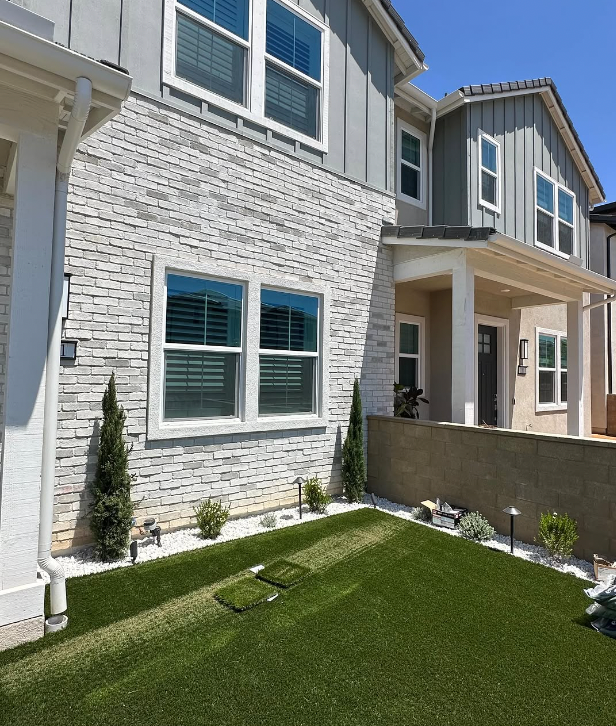
Artificial turf installed near a west or south-facing window, where afternoon sun angle is most likely to create a reflected hot spot.
-
A second-story window angled toward a yard, patio, or turf area below.
-
Multiple windows on the same side of the home, which can sometimes create overlapping reflections that intensify the effect.
If you've already noticed a melted or discolored patch of turf, the window responsible is almost always the one directly facing that spot.

Common Questions About Turf Burn Protection Film
Turf burn happens when sunlight reflects off low-e or dual-pane window glass and concentrates into a focused beam, similar to a magnifying glass effect. That concentrated reflection can reach temperatures high enough to melt or scorch artificial turf, especially during peak afternoon sun.
The window responsible for turf burn is almost always the one directly facing the damaged area, usually a west or south-facing window that catches strong afternoon sun. An on-site assessment can confirm the exact window and reflection angle causing the issue.
he film is designed to reduce harmful reflectivity without significantly changing how your window looks from inside or outside. Most homeowners don't notice a visible difference beyond the fact that the reflected hot spot on their turf is gone.
Film compatibility depends on your specific glass type. Low-e and dual-pane windows require a film formulated to work safely with that coating. An on-site assessment confirms your glass type and selects a compatible film so your window warranty isn't affected.
You can, but without addressing the window, the new turf will be exposed to the same reflected heat and will likely suffer the same damage over time. Treating the window is the only way to stop the problem at the source rather than repeatedly replacing turf.
Once the problem window or windows are identified, installation is typically completed in a single visit. Most homeowners see the reflected hot spot eliminated immediately after the film is applied.
Pricing depends on the number of windows affected, window size, and glass type. Because most turf burn cases involve just one or two specific windows rather than the whole home, this tends to be one of the more targeted and cost-effective film applications we offer. An on-site assessment will give you an accurate quote based on your specific situation.
Stop Turf Burn Before It Gets Worse
If you've noticed melting or scorched patches on your artificial turf, the window causing it is treatable, usually in a single visit.
Calview Films serves homeowners throughout Orange County, including Irvine, Mission Viejo, Rancho Santa Margarita, Aliso Viejo, Lake Forest, and Laguna Niguel.
Phone: (949) 344.3560
Learn more about Turf Protection Films
Further reading for homeowners and businesses researching turf burn protection film options.


